
Card-table terms
Teen Patti Tables: Read the Labels Before a Hand
The familiar name from a family card game does not make every mobile table identical. Check the rules and balance type for the specific mode on screen.
Updated
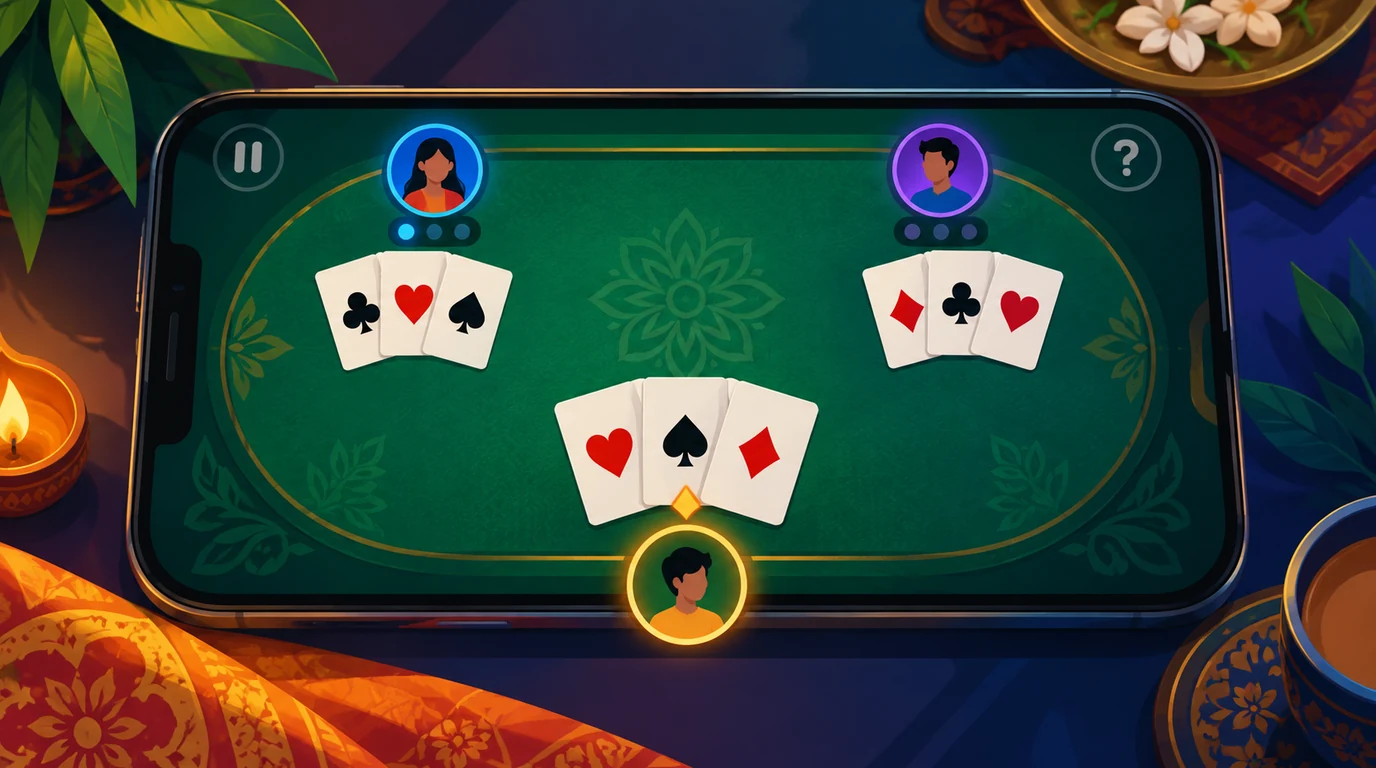
Start with the table description
Find the player count, entry range, timer and contribution limits. A table may use practice credits or another balance type. The visible number alone does not tell you which one is in use.
The opening contribution is often called the boot. Later choices are governed by the table’s own limits, so read the help panel before following a hand.
Blind, seen and show
“Blind” usually refers to acting without viewing your cards, while “seen” follows viewing them. A “show” compares hands under conditions set by the table. The exact contribution required for each action can vary, and the interface should state it before you confirm.
On a small screen, a timer can hide details quickly. If a label is unclear, leave the hand and read the rules rather than guessing.
Use records to understand what happened
A completed hand should have a result and an account entry where the service provides one. Keep the round reference if a displayed amount seems inconsistent. Avoid treating an animation or a temporary banner as the final record.
India-focused checks
If money is involved, verify that you meet the applicable requirements for your location and account. Keep personal spending limits in place and separate entertainment from rent, bills and family needs.